About

Our story
In 1970 The Israel Milestone Committee (IMC) was formed by Mordechai Gichon as a branch of the International Curatorium of the Corpus Miliariorum. The aim of the committee was to assemble, study and prepare for publication the milestones inscriptions found in Israel. The IMC also intended to carry out a systematic survey of all the extant remains related to roads, in order to provide a comprehensive picture of the Roman road network in Israel. For almost 40 years the Committee’s field and research work was led by Israel Roll and Benjamin Isaac together with other scholars.
Entire roads where published as final reports, in the form of monographs. Two reports have been already published in the British Archaeological Reports International Series
(Oxford): on the Legio-Scythopolis road (1982) and on the Jaffa-Jerusalem roads (1996). A third volume dealing with the roads in the Galilee is in preparation. Specific subjects, such as inscriptions of special historic interest, specific well preserved segments of roads, or regional networks where published as articles.
In 2007 Chaim Ben David joined the IMC and worked together with Israel Roll updating the milestones files and preparing the publication of the corpus of milestones in Israel including the anepigraphic milestones. In 2009 Uzi Leibner joined the project and launched a computerized data base of the milestones of the corpus. To date, more than one hundred milestone files where computerized.
In 2012 with the aid of the Bornblum Cathedra for the research of the Land of Israel in the Kinneret College on the Sea of Galilee all the pictures of milestones from the archive of the late Prof. Israel Roll where scanned, more milestone files are now being
computerized and this new web site was launched by Tzahi Harary.
Today (2020) the members of the IMC are: Benjamin Isaac, Guy Stiebel, Chaim Ben David, Yuval Shachar and Yotam Tepper.
Ever since 2018 the treatment and analysis of the data has been supported by the Israel Science Foundation’s Grant No. 1921/18.
Professor Israel Roll
Professor Israel Roll died on June 20, 2010 after a courageous two-year struggle with illness. He was one of the prominent classical periods archaeologists in Israel and a highly esteemed member of Tel Aviv University’s Faculty of Humanities. He taught in both the Department of Classics and the Department of Archaeology and Ancient Near Eastern Cultures.
Israel Roll was born in 1937 in Constanţa on the Romanian Black Sea coast. He immigrated to Israel in 1951, where his first few years were spent on Kibbutz Gvat. After a stint with the Israel Air Force technical staff, he studied at The Hebrew University of Jerusalem (1960–1964) under the tutelage of the late Professor Michael Avi-Yonah, acquiring a BA in Archaeology and Jewish History. In 1964 he obtained a scholarship to study Classical Archaeology towards a Diplôme d’Études Scientifiques (DES) at the University of Paris (Sorbonne, 1964–1965). He received an additional grant from the Sorbonne to study for a Doctorate (III Cycle) in Classical Archaeology, which he completed in 1970 under the supervision of the late Professor Gilbert Picard. His dissertation (Recherches sur l’iconographie mithriaque dans l’Orient romain) was partially published in a frequently-cited paper on the mysteries of Mithras in the Roman Orient. Although involved in writing his dissertation, Roll, who loved field work, often visited Israel during this period in order to join the late Dr. Jacob Kaplan in many of his excavations in Tel Aviv and its vicinity, such as Jaffa and Yavneh-Yam.
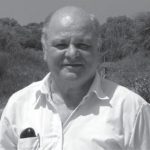
IN MEMORIAM
Israel Roll
(1937–2010)
Professor Mordechai Gichon
Professor Mordechai Gichon, one of the outstanding Classical archaeological and military historians of Israel in the last decades, passed away on 19 September 2016 at the age of 94.
Born in Berlin in 1922 as Mordechai Gicherman, he moved to Tel Aviv in 1934 with his family. He began his studies of archaeology and history at the Hebrew University of Jerusalem, but interrupted them to join the Haganah in 1940, in what would become a long-lasting military career, prompted by the dramatic events of the times. In 1942, he enlisted in the British army, taking part in various wartime operations; later he was involved in organizing illegal immigration of Holocaust survivors to Palestine. He was discharged from the British army in 1946 and returned to Palestine, where he resumed his studies at the Hebrew University. He rejoined military service before the Israeli War of Independence, serving in the military intelligence units of the IDF at the rank of lieutenant colonel until 1963.
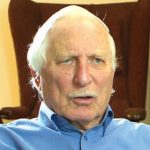
Mordechai Gichon
1922-2016